| Event Date | College | Department |
|---|---|---|
| Nov 20, 2026 | T .John Institute of Technology | Computer Science & Engg |
Description
Date : 20th November 2026
Time: 10:00 AM to 4:30 PM
No of students participated:56
Venue: Doordarshan Kendra
Organized for: 5th CSE A
Report
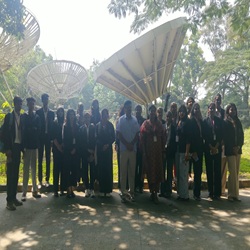
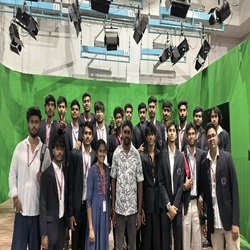
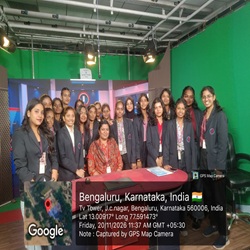
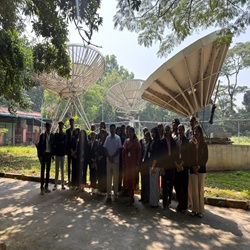
The Department of CSE organized an industrial visit to “Doordarshan Kendra, Bengaluru”, for the 5th semester CSE A Section student on 20th November, 2026. Total 56 students participated in the visit.
The visit offered an excellent opportunity to understand the application of modern information and communication technologies used in television production and broadcasting.
Objectives
The primary objectives of the industrial visit were:
To gain practical knowledge of television broadcasting systems.
To understand the workflow involved in content creation and transmission.
To explore audio-video production technologies used in media industries.
To bridge the gap between theoretical concepts and industrial practices.
To interact with industry professionals and learn about career opportunities in broadcasting and media technology.
Activities Conducted During the Visit
Upon arrival, the students were welcomed by the officials of Doordarshan Kendra and were provided with an overview of the organization, its history, and its role as India's public service broadcaster.
The students were then taken on a guided tour of various sections, including:
1. Television Production Studio
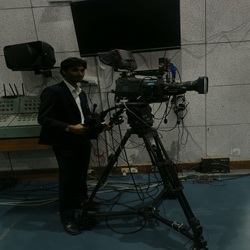
Students observed live studio setups, camera positioning techniques, lighting arrangements, and sound recording equipment used during program production. The technical staff explained the process of shooting television programs and managing studio operations.
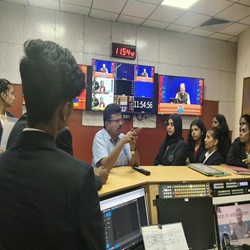
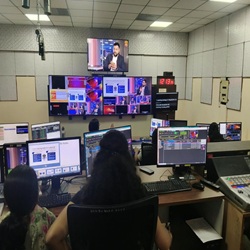
2. Master Control Room (MCR)
The visit to the MCR provided insights into the monitoring and control of all broadcast signals. Students learned how programs are scheduled, monitored, and transmitted to viewers across different regions.
3. Editing and Post-Production Unit
The officials demonstrated digital video editing software and explained the processes involved in video editing, visual effects, audio synchronization, and content enhancement before final broadcast.
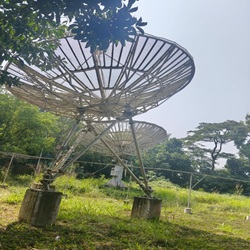
4. Transmission Department
Students were introduced to signal transmission technologies, satellite communication systems, uplink and downlink processes, and the infrastructure used to deliver television content to audiences.
5. News Production Section
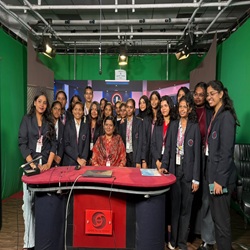
The functioning of news gathering, content verification, script preparation, news presentation, and telecasting was explained. Students gained an understanding of the complete news production workflow.
Outcomes:
The industrial visit enabled students to:
Understand the complete television broadcasting process from production to transmission.
Gain awareness of multimedia technologies and communication systems.
Learn the significance of control rooms and broadcasting infrastructure.
Understand the practical application of networking, signal processing, and communication technologies.
Explore career opportunities in broadcasting, media production, content management, and digital communication.
Develop appreciation for professional work environments and industry practices.
Photographs
For Admission Enquiry : +91- 91 13 26 49 15 | +91- 98 45 04 08 04


